Echinops exaltatus – Tall Globethistle

Botanical Family Asteraceae

Bloom Time July – September

Pollen Characteristics

Dispersal Unit Monad

Aperture Number 3

Aperture Type Compound

Ornamentation Granulate/Perforate

Tectum Semitectate

Size (um)

Shape Triangle

Pollen Color Light Green

Honey Bee Resources

Pollen Source • •

Nectar Source • •

Chaenomeles japonica – Japanese Quince

Botanical Family Rosaceae

Bloom Time April

Pollen Characteristics

Dispersal Unit Monad

Aperture Number 3

Aperture Type Colpus

Ornamentation Striate

Tectum Eutectate

Size (um)

Shape Triangular  

Pollen Color Tan, Dark yellow, Green

Honey Bee Resource

Pollen Source • •

Nectar  Source • • •


Allium tuberosum – Garlic Chives

Botanical Family Amaryllidaceae

Bloom Time August – September

Pollen Characteristics

Dispersal Unit Monad

Aperture Number 1

Aperture Type Sulcus/Inaperturate

Ornamentation Psilate

Tectum Eutectate

Size (um)

Shape Oval

Pollen Color Brown, Green

Honey Bee Resources

Pollen Source • • •

Nectar Source • • • •


Betula pendula – Silver Birch

Botanical Family Betulaceae

Bloom Time February

Pollen Characteristics

Dispersal Unit Monad

Aperture Number 3

Aperture Type Compound

Ornamentation Granulate/Perforate

Tectum Eutectate

Size (um)

Shape Round

Pollen Color Yellow, Green

Honey Bee Resources

Pollen Source •

Nectar Source N/A

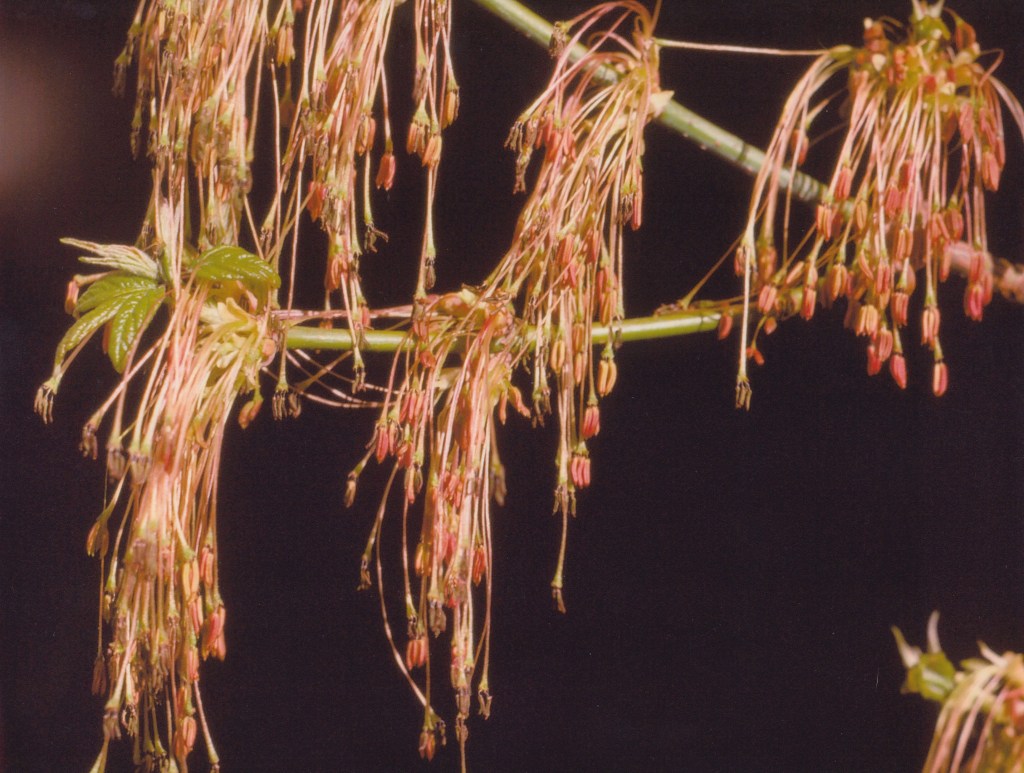
Acer negundo – Boxelder Maple


Botanical Family Sapindaceae

Bloom Time February – May

Pollen Characteristics

Dispersal Unit Monad

Aperture Number 3

Aperture Type Compound

Ornamentation Granulate/Perforate

Tectum Eutectate

Size (um)

Shape Round

Pollen Color Greenish Tan, light olive

Honey Bee Resource

Pollen Source • • • 

Nectar Source N/A

The honey made from Acer is typically pale amber in color. Maple trees are important to honey bees for early brood rearing.

Pollen Load Identification 

The pollen load for Acer negundo is typically large, and pollen collection causes pollen dusting on the honey bee’s head and antennae, and the posterior of the abdomen.

Sources

Hodges, D. (1952). The pollen loads of the honey bee: a guide to their identification by colour and form. London: Bee Research Assoc. Ltd.

Sammataro, D. and Harman, A. (2013). “Major Flowers Important to Honey Bees in the Northeast and Mid-Atlantic States”. AlphaGraphics, Tucson, AZ.

Full Acer negundo tree photo contributed by Mount Cuba