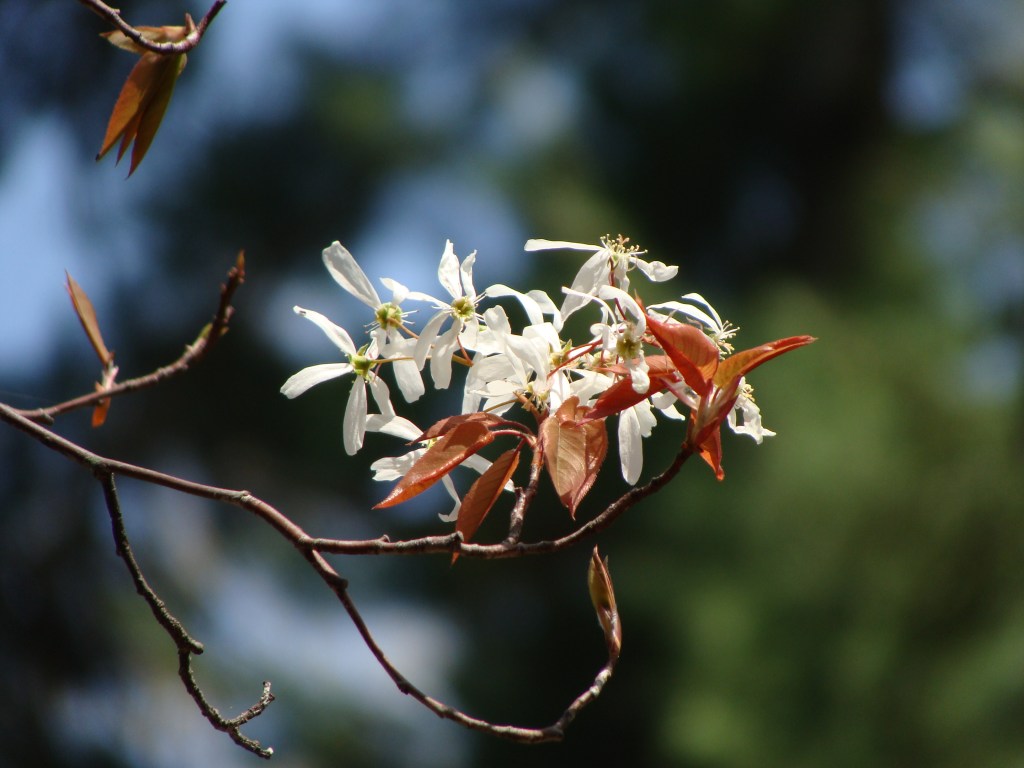
Corylopsis pauciflora – Buttercup Winterhazel

Botanical Family Hamamelidaceae

Bloom Time March – April

Pollen Characteristics

Dispersal Unit Monad

Aperture Number 3

Aperture Type Colpus

Ornamentation granulate/perforate

Tectum Semitectate

Size (um)

Shape Round

Honey Bee Resources

Pollen Source

Nectar Source

Cornus mas – Cherry Dogwood

Botanical Family Cornaceae

Bloom Time March

Pollen Characteristics

Dispersal Unit Monad

Aperture Number 3

Aperture Type Compound

Ornamentation Psilate

Tectum Eutectate

Size (um)

Shape Round

Pollen Color  Tan, light yellow

Honey Bee Resource

Pollen Source • •

Nectar Source • •

Cornus florida-Flowering Dogwood


Botanical Family Cornaceae

Bloom Time April–May


Pollen Characteristics

Dispersal Unit Monad

Aperture Number 3

Aperture Type Compound

Ornamentation Granulate/Perforate

Tectum Eutectate

Size

Shape Triangular

Amelanchier canadensis – Shadblow Serviceberry

Botanical Family Roseaceae

Bloom Time March – June

Pollen Characteristics

Dispersal Unit Monad

Aperture Number 3

Aperture Type Compound

Ornamentation Granulate/Perforate

Tectum Eutectate

Size (um)

Shape Round

Honey Bee Resources

Pollen Source

Nectar Source

Resources

Flower photos contributed by Mount Cuba

Amelanchier arborea – Serviceberry

Botanical Family Roseaceae

Bloom Time February – May

Pollen Characteristics

Dispersal Unit Monad

Aperture Number 3

Aperture Type Compound

Ornamentation Granulate/Perforate

Tectum Eutectate

Size (um)

Shape Triangular

Pollen Color 

Honey Bee Resources 

Pollen Source

Nectar Source

Resources

Flower photos contributed by Mount Cuba

Amelanchier laevis – Allegheny Serviceberry

Botanical Family Roseaceae

Bloom Time March – May

Pollen Characteristics

Dispersal Unit Monad

Aperture Number 4

Aperture Type Irregular

Ornamentation Psilate

Tectum Eutectate

Size (um)

Shape Irregular

Pollen Color Yellow

Honey Bee Resources

Pollen Source •

Nectar Source •

Resources

Flower photos contributed by Mount Cuba


Aesculus sylvatica – Painted Buckeye

Botanical Family Hippocastanaceae

Bloom Time March – June

Pollen Characteristics

Dispersal Unit Monad

Aperture Number 3

Aperture Type Compound

Ornamentation Clavate

Tectum Eutectate

Size (um) 

Shape Round

Pollen Color 

Honey Bee Resources 

Pollen Source

Nectar Source

Pollen Load Identification

The pollen of Aesculus spp. is known to cause a lot of dusting on the body of the foraging bee. Typically, the Aesculus spp. pollen creates a dusting on the posterior thorax, and the posterior and anterior abdomen of the foraging bee. Pollen has also been noted on the wings of bees visiting Aesculus for nectar instead of pollen.

Resources

Hodges, D. (1952). The pollen loads of the honey bee: a guide to their identification by colour and form. London: Bee Research Assoc. Ltd.

Flower photos contributed by Mount Cuba

Aesculus flava – Yellow Buckeye

Botanical Family Sapindaceae

Bloom Time March – June

Pollen Characteristics

Dispersal Unit Monad

Aperture Number 3

Aperture Type Compound

Ornamentation Clavate

Tectum Eutectate

Size (um)

Shape Round

Pollen Color 

Honey Bee Resource

Pollen Source

Nectar Source

Pollen Load Identification

The pollen of Aesculus spp. is known to cause a lot of dusting on the body of the foraging bee. Typically, the Aesculus spp. pollen creates a dusting on the posterior thorax, and the posterior and anterior abdomen of the foraging bee. Pollen has also been noted on the wings of bees visiting Aesculus for nectar instead of pollen.

Resources

Hodges, D. (1952). The pollen loads of the honey bee: a guide to their identification by colour and form. London: Bee Research Assoc. Ltd.A

Flower photos contributed by Mount Cuba

Acer rubrum – Red Maple

Botanical Family Sapindaceae

Bloom Time February–May

Pollen Characteristics

Dispersal Unit Monad

Aperture Number 3

Aperture Type Compound

Ornamentation Granulate/Perforate

Tectum Semitectate

Size (um)

Shape  Round

Pollen Color Gray-Brown, Yellow

Honey Bee Resources

Pollen Source • • •

Nectar Source • • •

The honey made from Acer is typically pale amber. Acer trees are important for early brood rearing.

Source

Sammataro, D. and Harman, A. (2013). “Major Flowers Important to Honey Bees in the Northeast and Mid-Atlantic States”. AlphaGraphics, Tucson, AZ.

Acer platanoides – Norway Maple


Botanical Family Sapindaceae

Bloom Time February – May

Pollen Characteristics

Dispersal Unit Monad

Aperture Number 3

Aperture Type Colpus

Ornamentation  Granulate/Perforate

Tectum Eutectate

Size (um) 32

Shape Round

Pollen Color Brown, dark brown, olive

Honey Bee Resource

Pollen Resource • •

Nectar Resource • • •

The honey from Acer is typically pale amber in color. Maples are important to honey bees for early brood rearing.

Sources

Sammataro, D. and Harman, A. (2013). “Major Flowers Important to Honey Bees in the Northeast and Mid-Atlantic States”. AlphaGraphics, Tucson, AZ.