Prosartes lanuginosa – Yellow Mandarin

Botanical Family Liliaceae

Bloom Time April – June

Pollen Characteristics

Dispersal Unit Monad

Aperture Number 1

Aperture Type Sulcus

Ornamentation Granulate/Perforate

Tectum Eutectate

Size (um)

Shape Round

Pollen Color

Honey Bee Resources

Pollen Source

Nectar Source

Sassafras spp. – Sassafras

Botanical Family Lauraceae

Bloom Time April – May

Pollen Characteristics

Dispersal Unit Monad

Aperture Number N/A

Aperture Type Inaperturate

Ornamentation Echinate/Granulate

Tectum Eutectate

Size (um) 40

Shape Round

Pollen Color Yellow

Honey Bee Resources

Pollen Source • •

Nectar Source •

Ornithogalum spp. – Star-of-Bethlehem

Botanical Family Asparagaceae

Bloom Time May – July

Pollen Characteristics

Dispersal Unit Monad

Aperture Number 1

Aperture Type Sulcus

Ornamentation Psilate/Granulate

Tectum Eutectate

Size (um)

Shape Round

Pollen Color White, cream

Honey Bee Resources

Pollen Source • •

Nectar Source • •

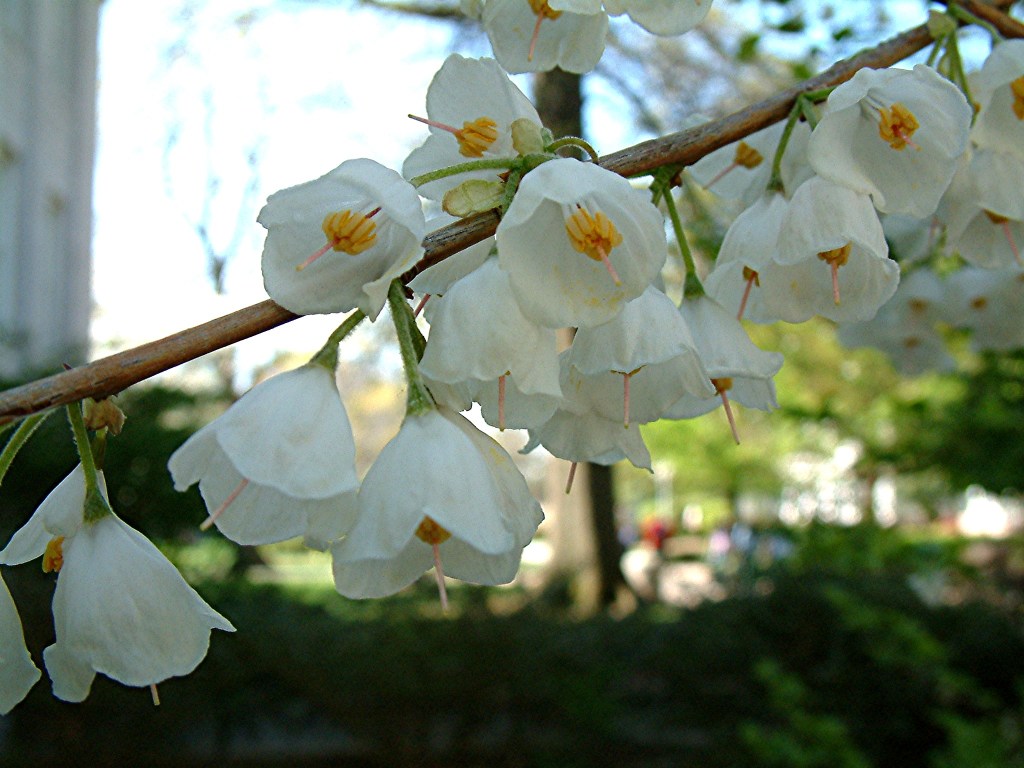
Halesia carolina – Carolina Silverbell

Botanical Family Styracaceae

Bloom Time April

Pollen Characteristics

Dispersal Unit Monad

Aperture Number 3

Aperture Type Compound

Ornamentation Granulate/Perforate

Tectum Semitectate

Size (um)

Shape Round

Pollen Color Dark Yellow

Honey Bee Resources

Pollen Source • •

Nectar Source • •

Flower photo contributed by Mount Cuba

Physalis heterophylla – Clammy Ground Cherry

Botanical Family Solanaceae

Bloom Time June – September

Pollen Characteristics

Dispersal Unit Monad

Aperture Number 3

Aperture Type Compound

Ornamentation Granulate/Perforate

Tectum Semitectate

Size (um) 

Shape Round

Pollen Color 

Honey Bee Resources

Pollen Source

Nectar Source

Aesculus carnea – Red Horse Chestnut

Botanical Family Sapindaceae

Bloom Time May

Pollen Characteristics

Dispersal Unit Monad

Aperture Number 3

Aperture Type Compound

Ornamentation Perforate/Striate

Tectum Semitectate

Size (um) 

Shape Round

Pollen Color Red, Dark Orange

Honey Bee Resources

Pollen Source • •

Nectar Source • •

Pollen Load Identification

The pollen of Aesculus spp. is known to cause a lot of dusting on the body of the foraging bee. Typically, the Aesculus spp. pollen creates a dusting on the posterior thorax, and the posterior and anterior abdomen of the foraging bee. Pollen has also been noted on the wings of bees visiting Aesculus for nectar instead of pollen.

Resources

Hodges, D. (1952). The pollen loads of the honey bee: a guide to their identification by colour and form. London: Bee Research Assoc. Ltd.


Acer rufinerve – Grey Snake-Bark

Botanical Family: Sapindaceae

Bloom Time April – May

Pollen Characteristics

Dispersal Unit Monad

Aperture Number 3

Aperture Type Colpus

Ornamentation Striate

Tectum Semitectate

Size (um) 42

Shape Round

Pollen Color

Honey Bee Resources

Pollen Source

Nectar Source

Acer palmatum – Japanese Maple

Botanical Family Sapindaceae

Bloom Time April

Pollen Characteristics

Dispersal Unit Monad

Aperture Number 3

Aperture Type Compound

Ornamentation Striate

Tectum Semitectate

Size (um)

Shape Round

Pollen Color

Honey Bee Resources

Pollen Source

Nectar Source

Clematis recta – Clematis

Botanical Family Ranunculaceae

Bloom Time May – July

Pollen Characteristics

Dispersal Unit Monad

Aperture Number 3

Aperture Type Compound

Ornamentation Psilate/Striate

Tectum Eutectate

Size (um) 22

Shape Round

Pollen Color Light Green, Light Yellow

Honey Bee Resources

Pollen Source

Nectar Source

Clematis orientalis – Orange Peel Clematis

Botanical Family Ranunculaceae

Bloom Time July – September

Pollen Characteristics

Dispersal Unit Monad

Aperture Number 3

Aperture Type Colpus

Ornamentation Granulate/Perforate

Tectum Eutectate

Size (um) 21

Shape Round

Pollen Color Light Green, Light Orange, Light Yellow

Honey Bee Resources

Pollen Source

Nectar Source